Why Move?
A movement scientist’s perspective
Every 4 years during summer we witness the rare occurrence of global unity during the Olympics and Paralympics. As an adult, I felt the same excitement when I was a kid watching the world’s best athletes compete and cheering for team USA. It always amazes me how these short weeks of sport can stir emotion every time. What is it about sport that has a profound affect us?
Perhaps Nelson Mandela's speech during his acceptance of the Laurels World sports award hit the mark when he spoke about the power of sport. Or how Kip Keno, 2016 Olympic Laurel Distinction award recipient, reminded us sport can be a vehicle for positive change in today's world. Or maybe it's just pure entertainment, as Howard Cosell said, "sport is the toy department of human life".
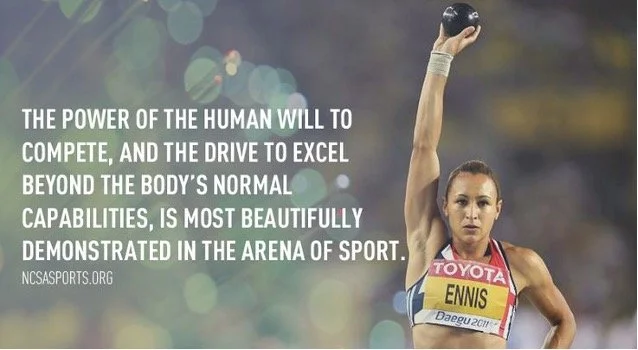
These elements are part of the answer, but there is also something primal to which we all connect. This unifying thread is partially why naturalistic fitness trends (like CrossFit and minimalist running) are gaining popularity in society that is pulling us toward a fate like the humans in Wall-E.
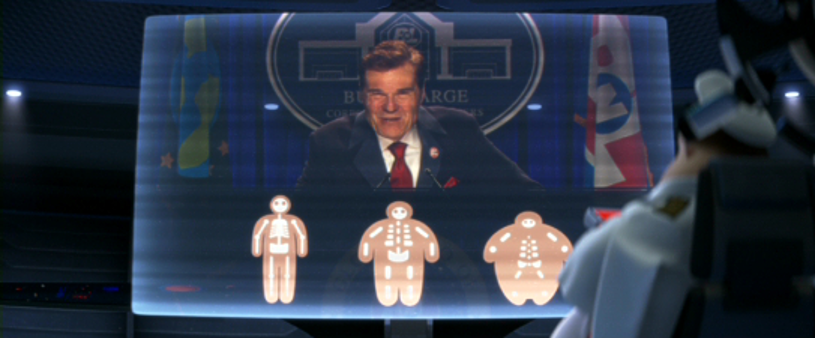
Wall-E: one of the finest social commentaries on a possible fate of a sedentary society
We Are Physical Creatures
Admit it. You feel better when you move… especially when you ignore those pesky, monkey-mind excuses. We remember the joy and social connection we felt as kids playing sports and the Olympics are a touchstone to this unifying physical-social connection.
As a movement scientist, I’d like to think that people are interested in minimalist running because they too get geeked about the mechanical efficiency of our feet… but I know that’s probably not the case. Just like the majority of CrossFitters likely don’t keep returning for notoriously hellish workouts because they love adding another data point to graphs of their progress like me… mmmm data. Instead, I think fitness trends that get back to our roots as physically active creatures are growing in popularity for three main reasons:
1) Provide a tribe and social connection
2) Use functional movements (like picking up heavy things and putting them down again - think kettlebells or your toddler)
3) Remind us how fun it is to play
Like our magnificent brains, the human body has been honed through millennia. It has been refined into an efficient machine whose physiological function and health is intrinsically connected to our emotional and social well-being.
Is Inactivity Eating Our Brains?
Physical activity is important to living a healthy, happy life. But if movement is so fundamental to who we are, then why do we stop?
Scientists now say sitting is the new smoking. We’re bombarded with news about the alarming health problems associated with inactivity. With the focus on physical health, we may not realize just how important staying active is to all of our body’s functions. It doesn't just benefit our hearts and waistlines; it does amazing things for our brains. The following quote from Dr. John Ratey’s book Spark masterfully illustrates the importance of moving:
The human brain developed to make us better movers. More brain cells participate when we are moving, exercising, and playing than if we are motionless. Action is good for the brain, and similar to muscle action, the adage use it or lose it applies.
Only a mobile creature needs a brain, points out New York University neurophysiologist Rodolfo Llinás in his 2002 book, I of the Vortex: From Neurons to Self.
To illustrate, he uses the example of a tiny jellyfish-like animal called a sea squirt. Born with a simple spinal cord and a three hundred–neuron “brain,” the larva motors around in the shallows until it finds a nice patch of coral on which to put down its roots. It has about twelve hours to do so, or it will die.
Once safely attached, however, the sea squirt simply eats its brain. For most of its life, it looks much more like a plant than an animal, and since it’s not moving, it has no use for its brain.
Llinás’s interpretation: “That which we call thinking is the evolutionary internalization of movement.”
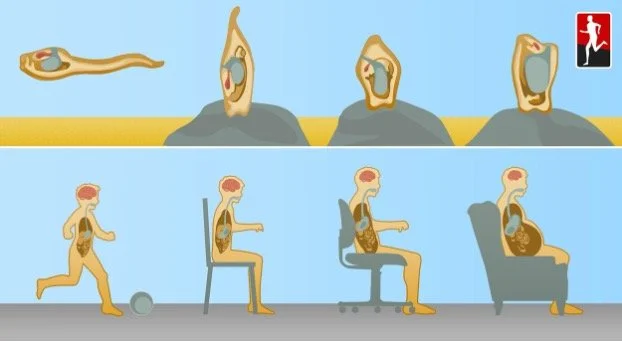
The human-sea squirt connection: Like adolescent sea-squirts, human children frequently move and their brains make important neural connections. But as we age into adulthood, our declining movement is correlated with declining cognitive function.
If you have any doubts on the tremendous benefits exercise has on the brain, please read the book. You'll never think about exercise for you or your children the same way again.
Movement is Medicine
We could devote numerous blog posts about the contribution sedentary lifestyles have on the many “diseases of civilization”. But as a movement scientist, I’m also interested in helping individuals who want to move but can't because of an impairment, injury, age related restrictions, or illness. I am working to enhance our understanding of the obstacles these populations face and leverage technology to provide solutions.
Who wouldn’t want a sweet Robo-cop-esque exoskeleton, especially if it helps you walk further and stay active?! Movement is medicine and I know we can develop innovative solutions to provide opportunities for including adaptive movement into their lives. Think of movement as the spoon full of sugar that helps the medicine go down!
The Quantified Self movement is a result of using technology to monitor one’s health and provide information helpful for reaching health related goals. Engineers and scientists have been using this approach to better understand machines and systems for years. Healthcare is finally adopting this strategy. That’s how I’m helping Motus... to utilize data and an evidence based approach to find fun and creative ways to integrate more movement into our lives and incorporate social connection, especially for those with limitations.
The Movement Connection
I’ve shared some reasons why movement is so important, but I’m really curious to learn about your thoughts on why we move. What movement obstacles have you overcome or do you still face today? What keeps you from moving? We'd love to hear your thoughts and encourage you to share… what moves you?
After School Special
I’ll leave you with 3 nuggets that inspire me to move and integrate movement variety into my busy life.
1) Janine Shepherd's Olympian/Paralympian journey: why a broken body isn’t a broken person
2) The amazing Team Hoyt: “Dad, when we run, I feel like my disability disappears.”
3) American Heart Association: Simple life hacks for moving more